Blue Origin Enters the Race for Orbital Data Centers to Scale AI in Space
Blue Origin has received regulatory approval, pending FCC permission, to launch a constellation of nearly 52,000 solar-powered satellites for orbital AI data centers. This initiative, named "Project Sunrise," aims to address the growing technical and economic challenges of scaling AI infrastructure on Earth, particularly the scarcity of electricity and potable water for cooling. The plan involves 51,600 satellites in sun-synchronous orbits (500-1,800 km), utilizing inter-satellite optical links and the TeraWave network for data downlink.
The significant development isn't merely the prospect of an orbital hyperscaler, but Blue Origin's ambition to build the entire vertical stack required for such a feat. This includes TeraWave, a previously announced network of 5,408 satellites designed for enterprise, data center, and government clients, promising up to 6 Tbps data transfer speeds with an initial deployment by late 2027. Additionally, Blue Origin promotes Blue Ring as an orbital platform offering payload hosting, power, communications, storage, and even edge/AI computing capabilities. Thus, Blue Origin aims to be a comprehensive integrator of connectivity, orbital mobility, and long-term computing capacity.
The Future of AI Business is in Space, and Blue Origin Prioritizes This Market
The underlying rationale for the industry is clear: AI is straining terrestrial infrastructure, creating bottlenecks in electricity, land, water, and cooling—a particular challenge for the U.S. compared to China. Consequently, American companies like Blue Origin, SpaceX, and Starcloud are vying to lead in developing space-based AI data centers. While China might trail in certain technological aspects, it possesses abundant energy and land resources for unconstrained AI data center deployment on Earth.
Blue Origin, championed by owner Jeff Bezos (also of Amazon), pitches space as a "second layer" of capacity. This offers nearly continuous solar power, radiative thermal dissipation, reduced reliance on terrestrial power grids, and less pressure on Earth's local resources—a narrative not exclusive to Bezos.
The concept has been discussed at the World Economic Forum as a potential solution to AI's energy demands. Google's Project Suncatcher research indicates the idea doesn't violate physical laws but achieving economic parity would require launch costs to drop below $200 per kilogram by the mid-next decade. Bezos himself stated in 2025 that he anticipated orbital data centers could surpass terrestrial ones in cost-effectiveness within 10 to 20 years.
However, unlike its competitors, Project Sunrise remains in its nascent stages. Blue Origin's FCC filing requests several regulatory waivers, acknowledges that satellite design is still maturing, and states that its orbital debris mitigation plan will be refined as the design progresses. It also notes that system information has not yet been submitted to the International Telecommunication Union. Thus, while Blue Origin has formally entered the race, it is currently in a regulatory and strategic positioning phase, not immediate industrial execution.
SpaceX Prepares for a Constellation of 1 Million Solar-Powered AI Data Satellites
While Blue Origin navigates regulatory hurdles, SpaceX unveiled a plan in January for a constellation of 1 million solar-powered satellites dedicated to AI data centers. Across the globe, China has announced a five-year plan to deploy space-based AI data centers, aiming for "gigawatt-class" infrastructure.
This signifies more than just a futuristic vision from Jeff Bezos and Elon Musk; it's an industrial and geopolitical race to determine where a significant portion of future AI computing will reside. Furthermore, considering recent events, such as data centers becoming targets in Iran, the concept of space-based data centers as safeguards gains considerable relevance.
Additionally, Starcloud has partnered with NVIDIA and Rendezvous Robotics to accelerate the development of space-based AI data centers. Their proposal involves deploying thousands of interconnected satellites powered by a modular solar array that, once assembled in space, would span 16 square kilometers. SpaceX is also involved in launching these satellites, potentially utilizing its new Starlink V3 satellites, which offer satellite internet connections of up to 1,000 Gbps.
Fresh materials — Technology News

Google Pixel Devices Hit by Nightmare Bug: September Update Locks Out Some Users
Updating your phone should be a simple process: install, restart, and continue. But imagine completing the update, entering your usual unlock pattern, and the phone not even letting you finish it. Your photos and messages remain, but you're locked out. This is the predicament some Google Pixel
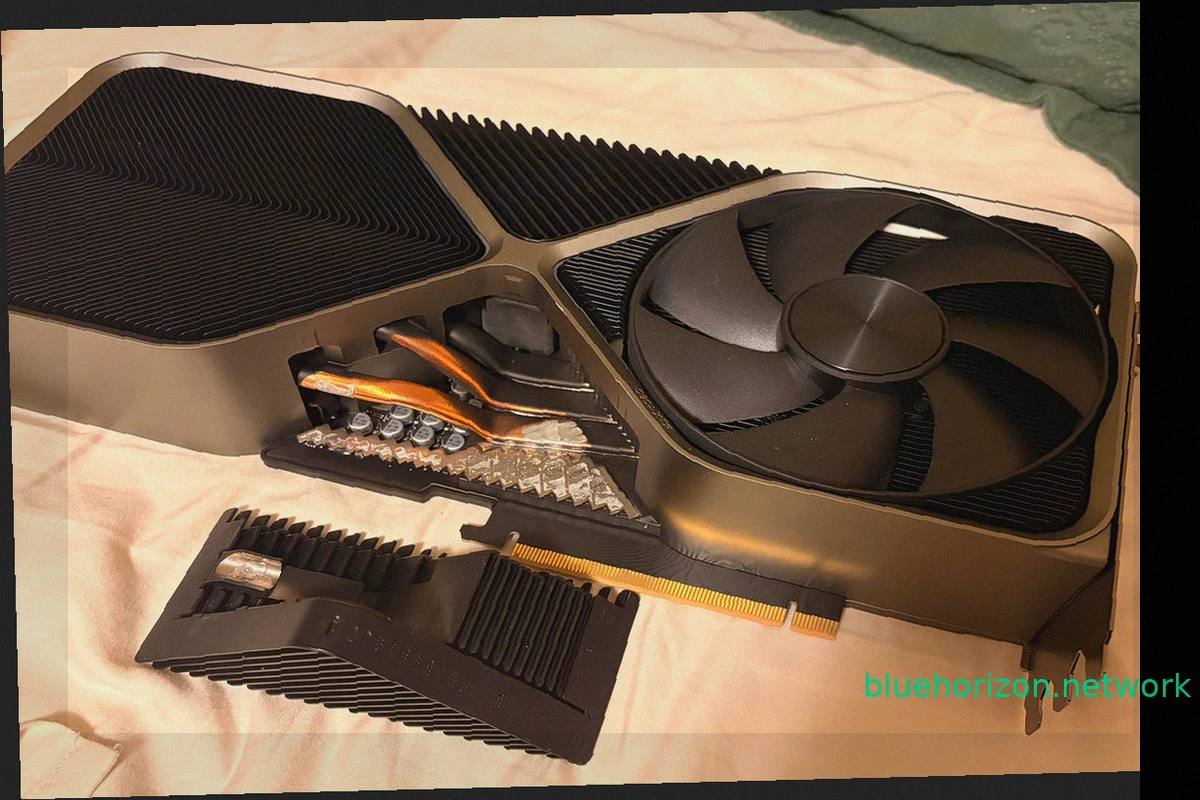
NVIDIA GeForce RTX 4090 Founders Edition Loses Part of Its Heatsink After Three Years
A NVIDIA GeForce RTX 4090 Founders Edition has presented an unusual problem, not with its power connector, but with its heatsink. This incident is unique, as a portion of the graphics card's massive heatsink literally detached while its owner was moving the computer. This wasn't a decorative c

Russian Missiles Strike Infrastructure of 1337x, Second Largest Torrent Tracker, Hitting Piracy
Russian missile attacks have damaged infrastructure belonging to popular torrent trackers like 1337x. Between September 23 and 27, 2026, Russia conducted strikes targeting data centers and communication facilities in Kyiv. These attacks temporarily disrupted internet access for approximately 1
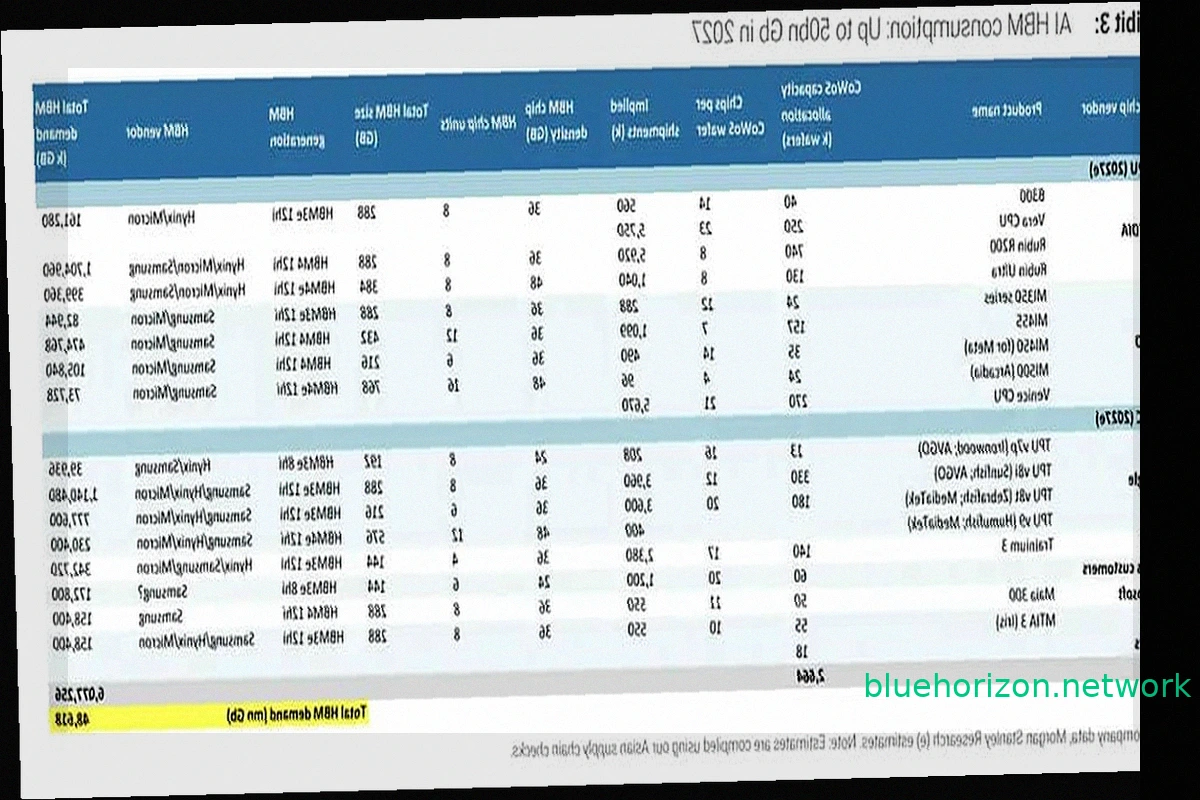
NVIDIA, Google, and AMD Poised to Control 85% of HBM Memory Demand by 2027
The "you'll own nothing and be happy" meme is finding a parallel in hardware, specifically memory. NVIDIA, Google, and AMD are set to command 85.4% of the global High Bandwidth Memory (HBM) demand by 2027, according to Morgan Stanley estimates. These three buyers will largely dictate the pace
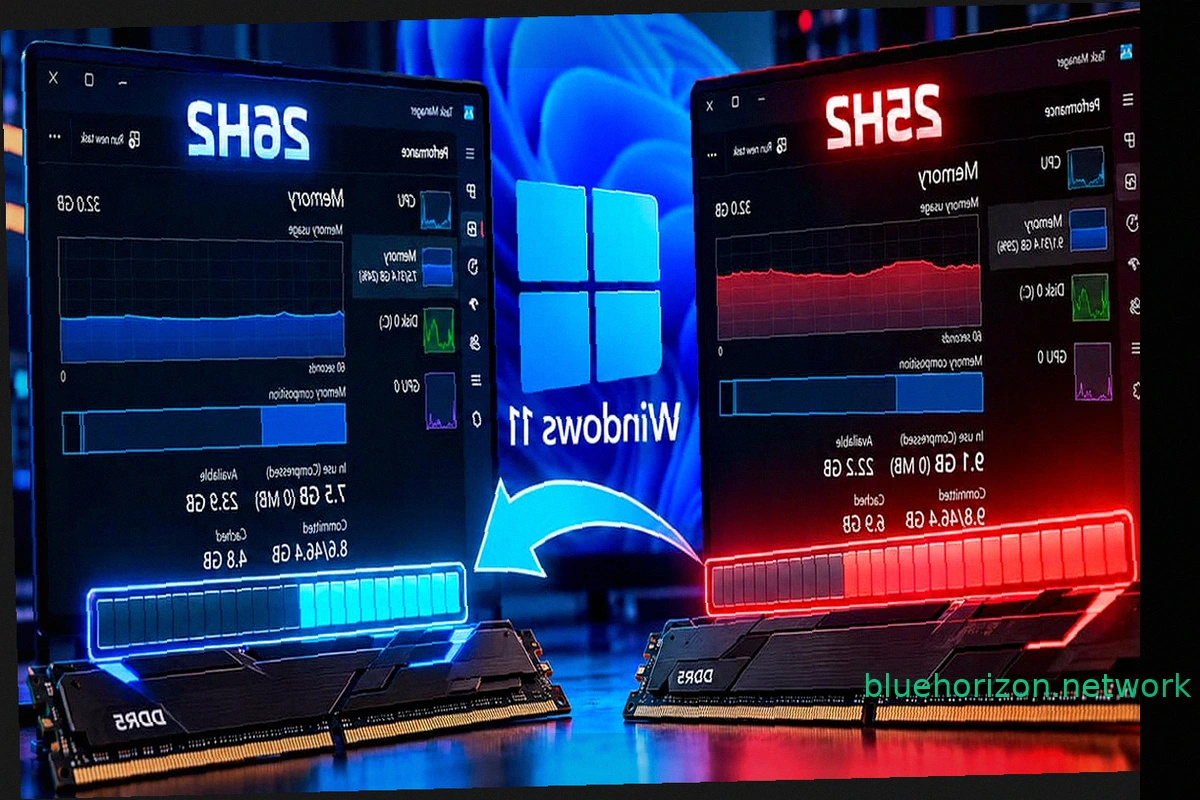
Windows 11 26H2 Reduces RAM Consumption by Up to 2 GB, But 8 GB Machines Still Struggle
Windows 11 26H2 is rolling out optimizations for RAM management. Some users report a noticeable decrease in RAM usage after installing this update, with certain systems showing a reduction of up to 2 GB compared to Windows 11 25H2 upon startup. However, initial findings suggest this improvemen

RTX 5090 fails with DLSS 5 after 48 hours for Chinese streamer
NVIDIA's RTX series introduced Tensor Cores, enabling technologies like DLSS. Early DLSS versions offered a noticeable drop in image quality compared to native resolution. DLSS 2 brought significant improvements, and DLSS 3 achieved parity or even superiority over native rendering. DLSS 4 cont