Google Presiona a los Medios: Regalar el Contenido para Entrenar IA o Perder los Ingresos de News Showcase
Google is intensifying its relationship with the media, essentially issuing an ultimatum. According to several reports, the company is linking its Google News Showcase agreements and its new AI-driven news pilots to a broader condition: that publishers grant rights to use their content in artificial intelligence features. This information will be used for training AI models. In essence, Google is pressuring media outlets to accept this new framework or risk losing income from the Showcase program.
This move comes at a particularly sensitive time for the digital press. Google had already introduced a pilot program with publishers in December to test AI-generated article summaries, audio briefings, and new ways of displaying content within Google News, Gemini, and Search. In its public version, Google describes this as a commercial collaboration to help users discover news better. However, for many publishers, the problem is that these same summaries can prevent users from ever visiting their websites. And without users, there is no income to sustain them.
Google Now Uses Its News Showcase as a Lever to Force Media to Cede Content for AI Training
The significant change is that Google News Showcase is no longer just a news licensing or promotion agreement. It's transforming into a much broader negotiation avenue regarding the use of editorial content in AI products. Google has officially acknowledged that it pays for "extended display rights" and content delivery methods like APIs, and that it works with over 3,000 publications, platforms, and content providers in more than 50 countries.
Among the pilot programs are major names like Der Spiegel, El País, Folha de S. Paulo, Infobae, Kompas, The Guardian, The Times of India, The Washington Examiner, and The Washington Post. Google asserts that these trials aim to offer more context before the click, with clear attribution and links to articles. The issue, according to published information, is that the contractual package also requires broad rights over content, including its use for AI and model training.
This is the contentious point. We are not only talking about Google displaying a headline, a summary, or an enriched card, but about allowing its AI systems to process, repackage, and potentially learn from that content. For large publishing groups, this might simply be a negotiation task. However, for small and medium-sized media outlets, the leverage is much lower because renouncing Google means losing visibility, traffic, and a significant portion of advertising revenue. This implies that all these websites will continue to disappear.
AI is Already Reshaping the Internet as We Know It, and This New Move Accelerates the Process
It all began with AI Overviews and other generative response formats that can resolve a user's query without them needing to visit the original website. In 2025, an antitrust complaint was filed by independent publishers in Europe against AI Overviews, arguing that Google uses editorial content to generate responses and doesn't offer a realistic way to opt out without harming their search engine presence. Google, on its part, defends that its features continue to send billions of daily clicks to the web.
There is also academic data that reinforces the concern. A 2026 study on AI Overviews analyzed 55,393 queries and found that these responses appear in 13.7% of the analyzed searches, rising to 64.7% for queries formulated as questions. Another study on Wikipedia estimated that exposure to AI Overviews reduced daily traffic to English articles by around 15%.
According to data from SparkToro and Similarweb (2024), about 58.5% of web searches on Google in the US already end without the user clicking on anything. For small media outlets and niche blogs, there have already been traffic drops of 70% to 90%. However, the number of websites has remained constant, around 1.1 billion websites, of which about 200 million are active. The reason? The same AI that has destroyed human creators' traffic is generating this content. There is now more AI-generated content on the internet than human-generated content.
Fresh materials — Technology News

Google Pixel Devices Hit by Nightmare Bug: September Update Locks Out Some Users
Updating your phone should be a simple process: install, restart, and continue. But imagine completing the update, entering your usual unlock pattern, and the phone not even letting you finish it. Your photos and messages remain, but you're locked out. This is the predicament some Google Pixel

NVIDIA GeForce RTX 4090 Founders Edition Loses Part of Its Heatsink After Three Years
A NVIDIA GeForce RTX 4090 Founders Edition has presented an unusual problem, not with its power connector, but with its heatsink. This incident is unique, as a portion of the graphics card's massive heatsink literally detached while its owner was moving the computer. This wasn't a decorative c

Russian Missiles Strike Infrastructure of 1337x, Second Largest Torrent Tracker, Hitting Piracy
Russian missile attacks have damaged infrastructure belonging to popular torrent trackers like 1337x. Between September 23 and 27, 2026, Russia conducted strikes targeting data centers and communication facilities in Kyiv. These attacks temporarily disrupted internet access for approximately 1
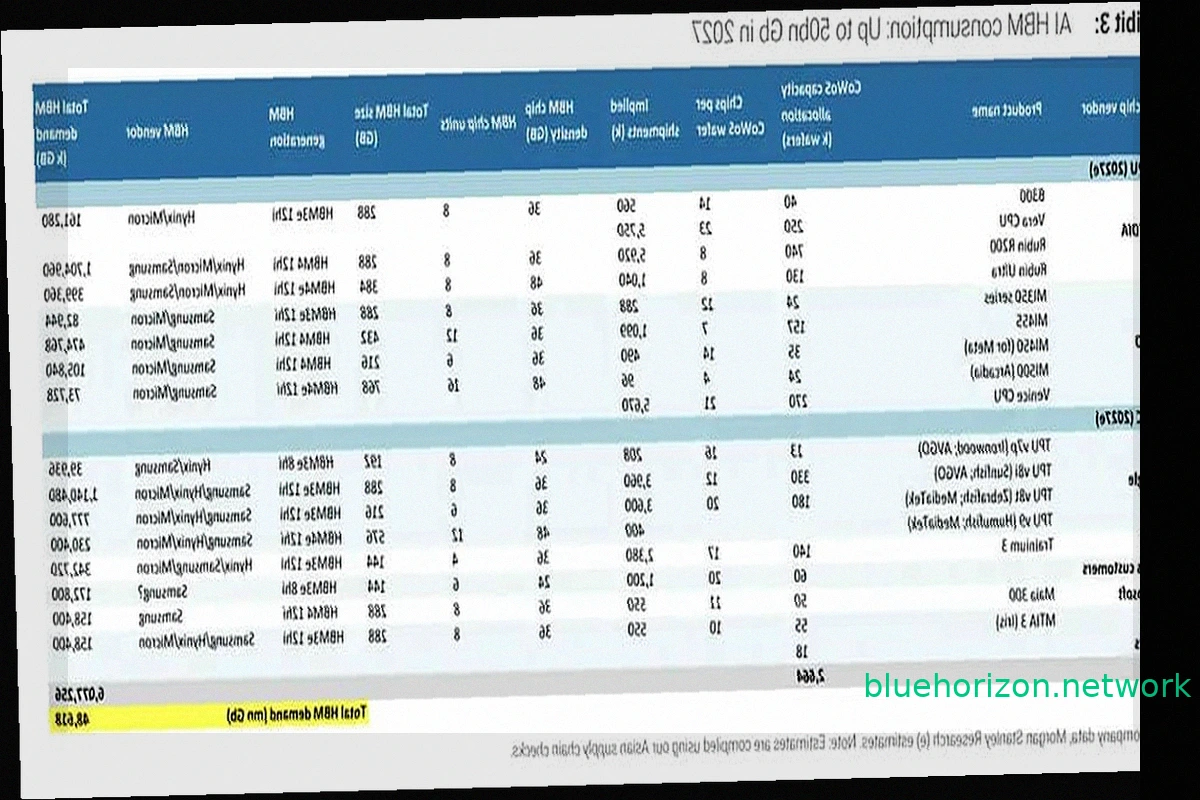
NVIDIA, Google, and AMD Poised to Control 85% of HBM Memory Demand by 2027
The "you'll own nothing and be happy" meme is finding a parallel in hardware, specifically memory. NVIDIA, Google, and AMD are set to command 85.4% of the global High Bandwidth Memory (HBM) demand by 2027, according to Morgan Stanley estimates. These three buyers will largely dictate the pace

Windows 11 26H2 Reduces RAM Consumption by Up to 2 GB, But 8 GB Machines Still Struggle
Windows 11 26H2 is rolling out optimizations for RAM management. Some users report a noticeable decrease in RAM usage after installing this update, with certain systems showing a reduction of up to 2 GB compared to Windows 11 25H2 upon startup. However, initial findings suggest this improvemen

RTX 5090 fails with DLSS 5 after 48 hours for Chinese streamer
NVIDIA's RTX series introduced Tensor Cores, enabling technologies like DLSS. Early DLSS versions offered a noticeable drop in image quality compared to native resolution. DLSS 2 brought significant improvements, and DLSS 3 achieved parity or even superiority over native rendering. DLSS 4 cont