Intel Eyes Google and Amazon to Challenge TSMC in Advanced AI Packaging with EMIB
For some time, Intel has been trying to convince the market that its future isn't solely about re-competing in traditional chip manufacturing, as it has done for most of its history, but also about gaining influence in a much more discreet segment of the business: advanced packaging. This is where today's rumor, published by WIRED, comes into play, pointing to active discussions with Google and Amazon to utilize Intel's advanced packaging services, specifically Intel EMIB or EMIB-T.
Is this a genuine, silent overtaking of TSMC, or a limitation on Taiwan's ability to produce more? While no confirmed contracts exist, the mere mention of these two names speaks volumes about the type of clients Intel needs for its Foundry to transition from a promise to a serious, and above all, profitable business.
Intel in Negotiations with Google and Amazon for Advanced Packaging Based on EMIB or EMIB-T
This thesis makes considerable sense from Intel's perspective, driven by the profitability sought for IFS. AI now requires more than just fabricating a more powerful GPU; it demands uniting logic, chiplets, interconnections, and HBM memory within the same package with minimal loss, lowest possible power consumption, and optimal space utilization. Furthermore, it needs to be as cost-effective as possible, complemented by open manufacturing capacity that isn't already saturated.
TSMC undeniably dominates this field with CoWoS, but Intel has been building its own path for years with EMIB and Foveros. Now it aims to sell this capacity to third parties in volume, and this is where Amazon and Google fit quite naturally, as both design their own chips and outsource critical parts of the process.
EMIB is important because it allows connecting different dies within the same package without requiring a complete, much more expensive, full-size interposer. Simply put, Intel proposes a more localized and selective connection between components.
If the Rumor Becomes Reality, it's a Giant Leap for IFS
WIRED even suggests that, within this context, EMIB and EMIB-T are viewed as a more "surgical" approach than TSMC's proposal, with the idea of saving space, improving efficiency, and containing long-term costs for the AI race. Additionally, manufacturing on U.S. soil would complete the circle, especially for clients designing increasingly large and complex accelerators. This promise ceases to be a technical detail and becomes a strategic issue that would satisfy all parties. That is, on paper, it makes sense; now, the actual figures need to be on the table.
EMIB-T further strengthens this interpretation. Intel announced it in May 2025, and according to the company, this evolution improves signal integrity and power efficiency between components, with factory deployment planned for — curiously — 2026. This is precisely where the rumor gains significant strength: Amazon and Google wouldn't need to commit to Intel for all their chips; entrusting a specific part of advanced assembly to Intel would suffice if they perceive it resolves a genuine bottleneck with TSMC.
The logical conclusion of this story lies in 2024, and indeed, it reinforces it. Intel and AWS announced in September of that year an expansion of their collaboration with a multi-year, multi-billion-dollar framework for custom chips, including an AI fabric chip on Intel 18A and a custom Xeon 6 on Intel 3.
This wasn't a packaging agreement per se, but it was proof that an industrial relationship already existed between the two parties and could scale with Amazon and Google for EMIB or EMIB-T within Intel Foundry Services. Seen this way, the current rumor doesn't emerge from nowhere; it builds upon a real precedent. If confirmed, if Intel manages to secure another major agreement... keep an eye on the blues; they could return to the global top 10 FAB list before the year ends.
Fresh materials — Technology News
Google Pixel Devices Hit by Nightmare Bug: September Update Locks Out Some Users
Updating your phone should be a simple process: install, restart, and continue. But imagine completing the update, entering your usual unlock pattern, and the phone not even letting you finish it. Your photos and messages remain, but you're locked out. This is the predicament some Google Pixel
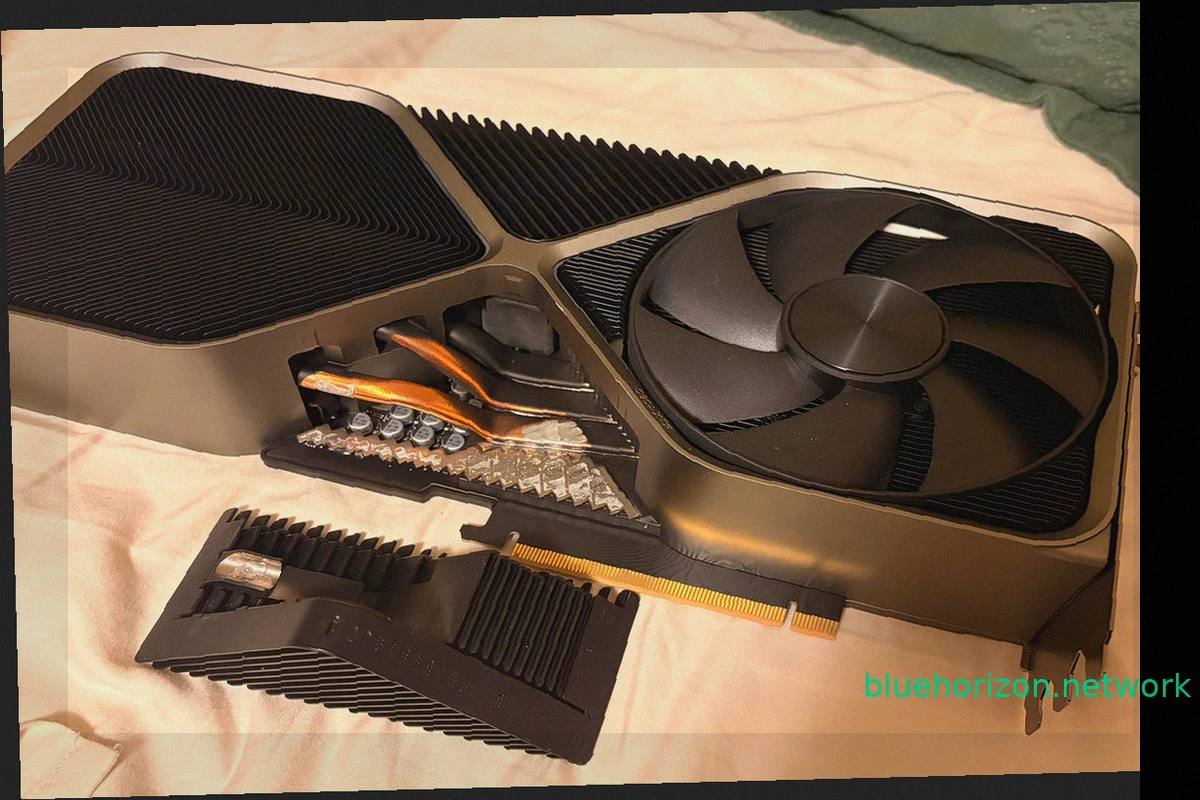
NVIDIA GeForce RTX 4090 Founders Edition Loses Part of Its Heatsink After Three Years
A NVIDIA GeForce RTX 4090 Founders Edition has presented an unusual problem, not with its power connector, but with its heatsink. This incident is unique, as a portion of the graphics card's massive heatsink literally detached while its owner was moving the computer. This wasn't a decorative c

Russian Missiles Strike Infrastructure of 1337x, Second Largest Torrent Tracker, Hitting Piracy
Russian missile attacks have damaged infrastructure belonging to popular torrent trackers like 1337x. Between September 23 and 27, 2026, Russia conducted strikes targeting data centers and communication facilities in Kyiv. These attacks temporarily disrupted internet access for approximately 1
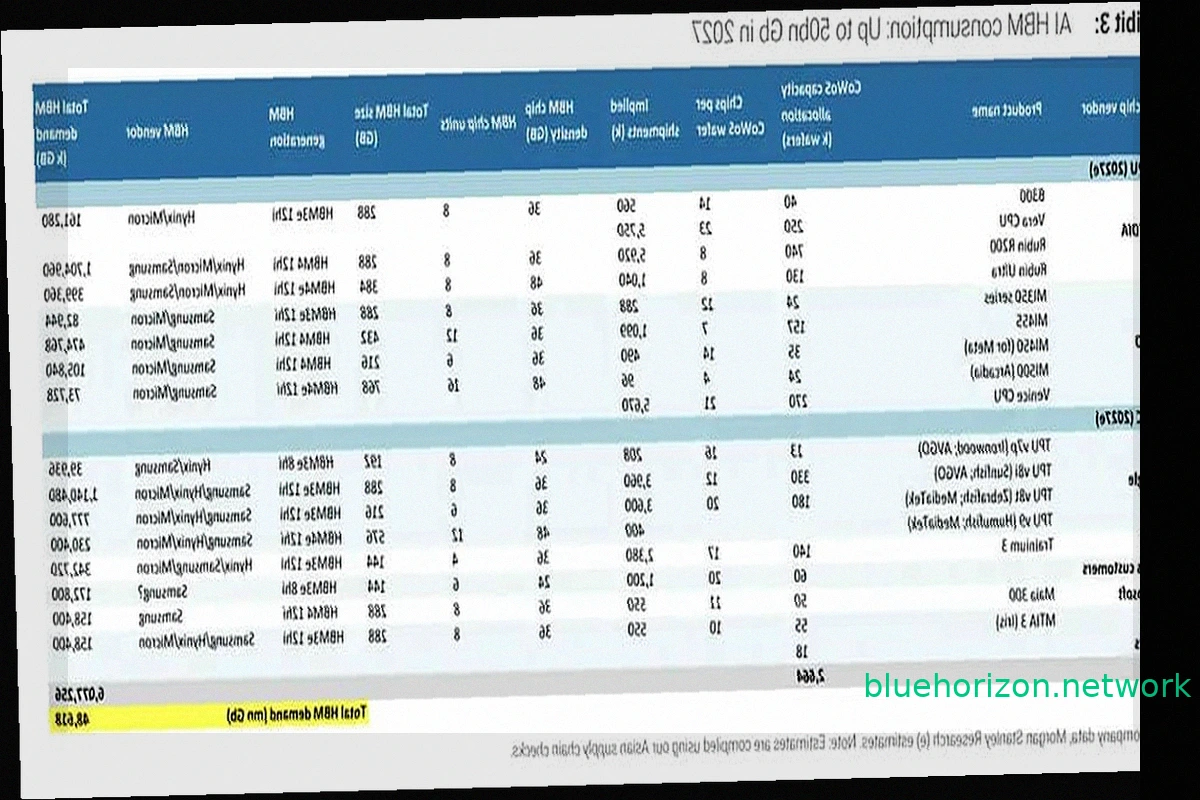
NVIDIA, Google, and AMD Poised to Control 85% of HBM Memory Demand by 2027
The "you'll own nothing and be happy" meme is finding a parallel in hardware, specifically memory. NVIDIA, Google, and AMD are set to command 85.4% of the global High Bandwidth Memory (HBM) demand by 2027, according to Morgan Stanley estimates. These three buyers will largely dictate the pace
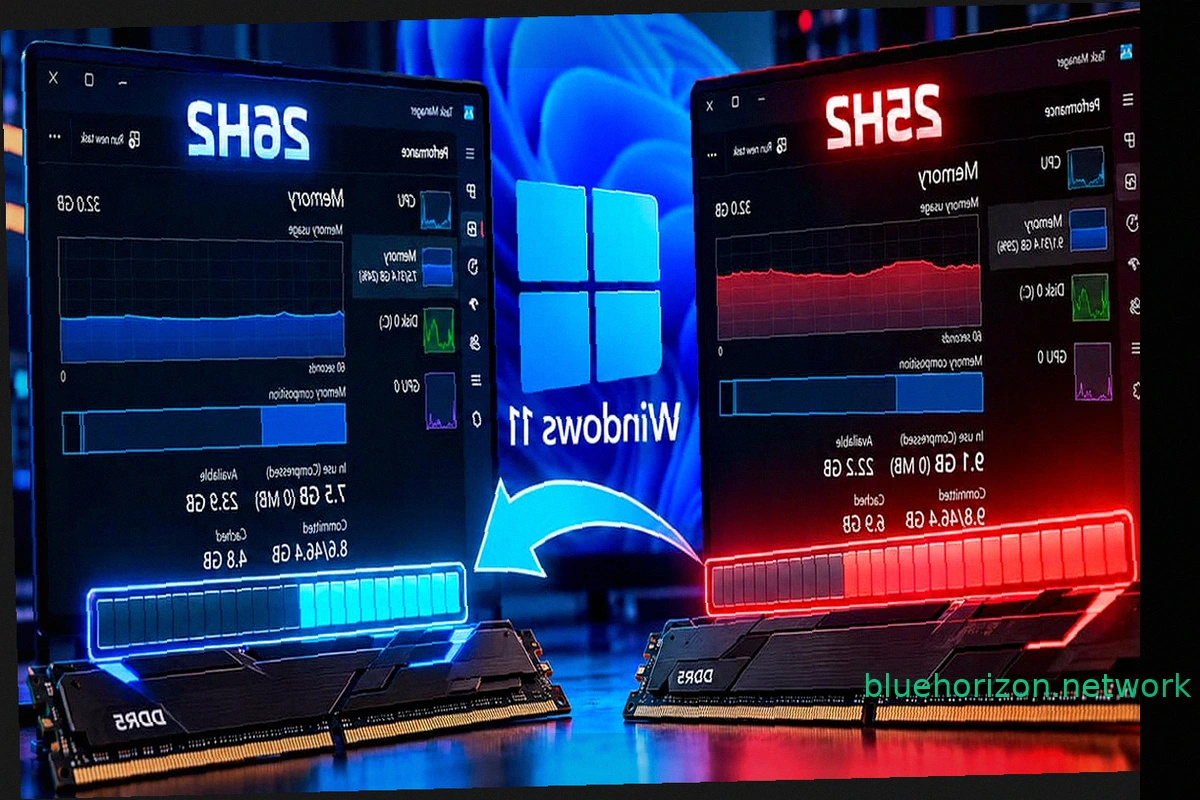
Windows 11 26H2 Reduces RAM Consumption by Up to 2 GB, But 8 GB Machines Still Struggle
Windows 11 26H2 is rolling out optimizations for RAM management. Some users report a noticeable decrease in RAM usage after installing this update, with certain systems showing a reduction of up to 2 GB compared to Windows 11 25H2 upon startup. However, initial findings suggest this improvemen

RTX 5090 fails with DLSS 5 after 48 hours for Chinese streamer
NVIDIA's RTX series introduced Tensor Cores, enabling technologies like DLSS. Early DLSS versions offered a noticeable drop in image quality compared to native resolution. DLSS 2 brought significant improvements, and DLSS 3 achieved parity or even superiority over native rendering. DLSS 4 cont